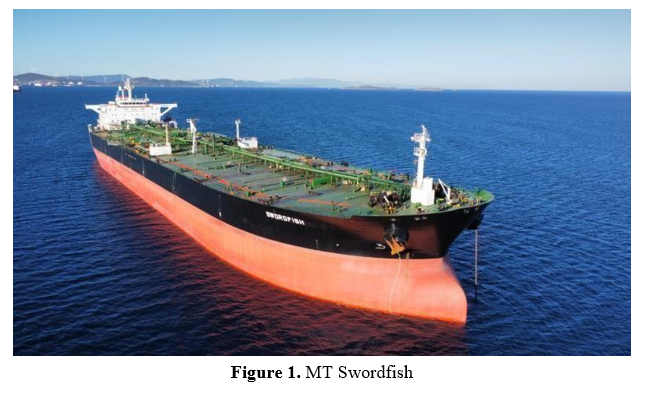
Analysis of Tank Cleaning Implementation Using Crude Oil Washing on MT Swordfish
Analisis Implementasi Pembersihan Tangki Menggunakan Pencucian Minyak Mentah pada MT Swordfish
DOI:
https://doi.org/10.48192/vns.v14i1.852Keywords:
Crude Oil Washing, Cargo Tank Integrity, Tank-Washing Equipment, Corrosion, Preventive MaintenanceAbstract
Crude oil washing (COW) is used to remove oil residues from cargo tanks while limiting the production of oily wash water, but its performance depends on equipment integrity and crew readiness. This study examines operational obstacles to COW on MT Swordfish and evaluates the responses taken before the vessel’s scheduled dry docking. A qualitative descriptive case-study approach was applied to observations, interviews with five categories of deck personnel, and shipboard documents collected during November 2023–November 2024. Data were analysed by reducing and comparing evidence across sources. Three equipment-related problems were identified: corrosion-related leakage in starboard COW line No. 4, which interrupted operations for approximately eight hours; malfunctioning fixed tank-washing machines caused by corroded gears; and seized manhole and purging-valve threads that delayed gas-freeing preparations. The reported response involved isolating the affected system, containing the spill, applying a temporary pipe repair, lubricating or manually moving impaired components, and planning permanent replacement during dry docking. Interviews also identified uneven procedural familiarity and workload pressures among the crew. The findings indicate that temporary corrective action enabled operations to continue but did not remove the underlying risks associated with ageing equipment and inconsistent preventive maintenance. A documented inspection programme, prompt replacement of defective components, task-specific training, and strict adherence to inert-gas and hot-work safety controls are recommended
References
Adigwe, C. C., Nwaogazie, I. L., Ugwoha, E., David, A. O., & Elemuo, N. G. (2022). Sludge pollution control from crude oil tank cleaning. Journal of Water Resource and Protection, 14(9), 632–649. https://doi.org/10.4236/jwarp.2022.149033
Altun, M. H. A., & Arslan, Ö. (2013). Environmental and safe optimization of crude oil washing on crude oil tankers. Journal of Black Sea/Mediterranean Environment, 19(2), 234–246. https://dergipark.org.tr/en/pub/jbme/article/121782
Bao, Q., Huang, L., Xiu, J., Yi, L., Zhang, Y., & Wu, B. (2022). Study on the thermal washing of oily sludge used by rhamnolipid/sophorolipid binary mixed bio-surfactant systems. Ecotoxicology and Environmental Safety, 240, Article 113696. https://doi.org/10.1016/j.ecoenv.2022.113696
Chrysalidis, A., & Kyzas, G. Z. (2020). Applied cleaning methods of oil residues from industrial tanks. Processes, 8(5), Article 569. https://doi.org/10.3390/pr8050569
Di, W., Li, W.-H., & Ma, X.-B. (2014). Application of mechanical cleaning method of crude oil storage tank. Petrochemical Equipment, 43(4), 104–106. https://doi.org/10.3969/j.issn.1000-7466.2014.04.025
Gao, J., Hao, M., Wu, T., & Li, Y. (2021). Efficient treatment of crude oil-contaminated hydrodesulphurization catalyst by using surfactant/solvent mixture. Journal of Environmental Chemical Engineering, 9(5), Article 105890. https://doi.org/10.1016/j.jece.2021.105890
Hasan, A. M. A., Kamal, R. S., Farag, R. K., & Abdel-Raouf, M. E. (2024). Petroleum sludge formation and its treatment methodologies: A review. Environmental Science and Pollution Research, 31, 8369–8386. https://doi.org/10.1007/s11356-023-31674-3
Hernandez, H. W., Ehlert, W., & Trabelsi, S. (2019). Removal of crude oil residue from solid surfaces using microemulsions. Fuel, 237, 398–404. https://doi.org/10.1016/j.fuel.2018.10.035
Imran, M., Setiawan, H., & Masrupah. (2022). Strategi pelaksanaan tank cleaning guna kelancaran proses muat di kapal MT John Caine. Jurnal Andromeda, 6(1), 301–312.
International Chamber of Shipping, Oil Companies International Marine Forum, & International Association of Ports and Harbors. (2020). International safety guide for oil tankers and terminals (ISGOTT) (6th ed.). Witherby Publishing Group.
International Maritime Organization. (2000). Crude oil washing systems (2000 ed.). International Maritime Organization. https://doi.org/10.62454/KA617E
International Maritime Organization. (2017). MARPOL: Consolidated edition 2017. International Maritime Organization.
Maes, F. (2025). Annex I: Construction and equipment requirements. In The international convention for the prevention of pollution from ships (pp. 233–251). Edward Elgar Publishing. https://doi.org/10.4337/9781803921389.00026
Maljković, M., Vukša, S., Vidan, P., & Pavić, I. (2022). Review of cargo operations on crude oil tankers and methods/models used for optimisation and improvement of safety. Journal of Maritime Sciences, 23(1), 153–164. https://doi.org/10.56080/jms220512
Miles, M. B., Huberman, A. M., & Saldaña, J. (2014). Qualitative data analysis: A methods sourcebook (3rd ed.). SAGE Publications.
Otzisk, B. (2008). Chemical cleaning and degassing refinery equipment. Petroleum Technology Quarterly, 13(1), 77–80.
Pagcatipunan, C. (2003). Options for automated tank cleaning. Chemical Engineering, 110(8), 27–32.
Pak, A., & Mohammadi, T. (2008). Wastewater treatment of desalting units. Desalination, 222(1–3), 249–254. https://doi.org/10.1016/j.desal.2007.01.166
Park, M.-H., & Lee, W.-J. (2025). Comprehensive review of shipboard maintenance management strategies. Results in Engineering, 27, Article 106671. https://doi.org/10.1016/j.rineng.2025.106671
Schindler, M., & Suba, Z. (2009). A new approach to tank cleaning. Hydrocarbon Engineering, 14(3), 111–114.
Su, H., Xiao, P., Niu, G., & Dong, J. (2023). Summary of application of purification technology for tank cleaning waste oil in a refinery. Petroleum Refinery Engineering, 53(5), 25–28.
Sugiyono. (2020). Metode penelitian kuantitatif, kualitatif dan R&D. Alfabeta.
Tian, M., Liu, H., Cui, J., Weng, Y., Wang, X., Feng, E., Zhang, W., Cao, C., Wen, J., Huang, G., & Xu, S. (2024). Mechanism of highly efficient oil removal from spent hydrodesulfurization catalysts by ultrasound-assisted surfactant cleaning methods. Journal of Hazardous Materials, 472, Article 134514. https://doi.org/10.1016/j.jhazmat.2024.134514
Wang, M., Zhang, B., Li, G., Wu, T., & Sun, D. (2019). Efficient remediation of crude oil-contaminated soil using a solvent/surfactant system. RSC Advances, 9(5), 2402–2411. https://doi.org/10.1039/C8RA09964B
Wang, Y., Zhang, N., Liu, S., Miao, C., & Liu, X. (2022). Performance and mechanism of thermochemical technology for oily sludge cleaning. Chemical Industry and Engineering Progress, 41(6), 3333–3340. https://doi.org/10.16085/j.issn.1000-6613.2021-1376
Wetlesen, K. W. (2006). Cleaning up tank cleaning. Hydrocarbon Engineering, 11(11), 103–106.
Yan, Y., Tong, K., Xu, Q., Xie, J., Li, C., Wu, H., & Nie, F. (2024). Analysis of the changes in the components of the chemical hot washing treatment of oily sludge and the mechanism of oil removal. Industrial & Engineering Chemistry Research, 63(1), 806–817. https://doi.org/10.1021/acs.iecr.3c02898